The Story of Divine Mercy

How God revealed His message of mercy to a humble Polish nun, and how it spread to become one of the greatest devotions of our time.

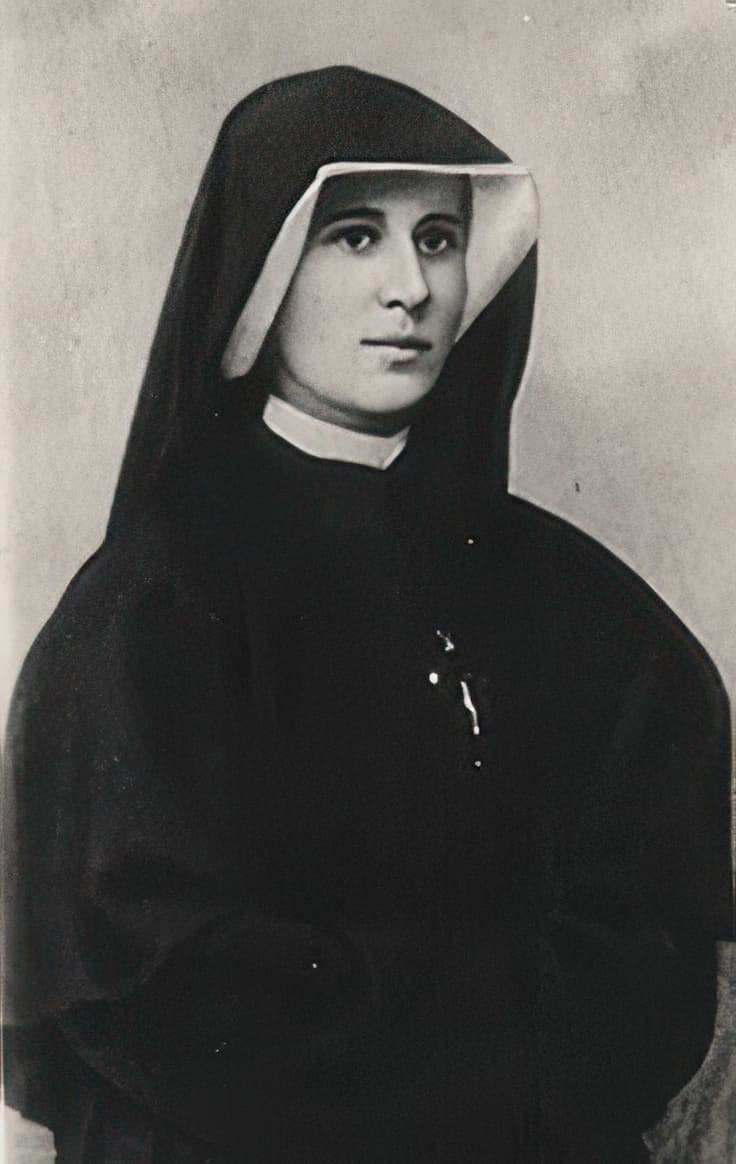
Saint Maria Faustina Kowalska

Saint Maria Faustina Kowalska (1905-1938)

Saint Faustina Kowalska

Helena Kowalska was born in 1905 to a poor family in Poland. From a very young age, she had a deep love for prayer and desired to enter religious life. Despite many obstacles, she joined the Congregation of the Sisters of Our Lady of Mercy in 1925, taking the name Sister Maria Faustina.

On February 22, 1931, Sister Faustina experienced her first vision of Jesus. He appeared to her dressed in a white robe, with rays of red and pale light emanating from His heart. Jesus instructed her to have an image painted according to this vision, with the signature: "Jesus, I trust in You."

Throughout the 1930s, Sister Faustina received numerous revelations from Jesus, which she recorded in her diary. These revelations focused on God's mercy for humanity and laid the foundation for what would become the Divine Mercy devotion.

Despite suffering from tuberculosis, Sister Faustina continued to carry out her mission to spread the message of Divine Mercy until her death on October 5, 1938, at the age of just 33. She was canonized (declared a saint) by Pope John Paul II on April 30, 2000.

The Message of Divine Mercy

The message of Divine Mercy is simple yet profound: God loves us—all of us—no matter how great our sins. He wants us to recognize that His mercy is greater than our sins, so that we will call upon Him with trust, receive His mercy, and let it flow through us to others.

Jesus told St. Faustina: "The greater the sinner, the greater the right he has to My mercy." This message is a reminder that no one is beyond the reach of God's compassion.

Trust

God wants us to approach Him with trust. The words "Jesus, I trust in You" encapsulate this foundational aspect of the devotion.

Mercy

We are called to receive God's mercy with thankfulness and to show mercy to others through our actions, words, and prayers.

Action

The message of mercy leads to action: we must ask for mercy, be merciful to others, and completely trust in Jesus.

The Divine Mercy Image

The Divine Mercy Image

The original Divine Mercy image painted under St. Faustina's direction

After St. Faustina's vision of Jesus, she worked with artist Eugene Kazimirowski to create the first Divine Mercy image in 1934. The image shows Jesus standing with His right hand raised in blessing, and His left hand touching His garment at the breast, from which emanate two rays: a red one and a pale one (representing blood and water).

Jesus explained the meaning of the rays to St. Faustina: "The pale ray stands for the Water which makes souls righteous. The red ray stands for the Blood which is the life of souls."

The image represents the risen Christ bringing mercy to the world. Jesus specifically requested that the words "Jesus, I trust in You" (in Polish: "Jezu ufam Tobie") be inscribed below the image.

Several versions of the image have been painted over the years, but they all contain the same essential elements as described by St. Faustina in her diary.

How the Devotion Spread

1938

St. Faustina's Death

Sister Faustina died on October 5, leaving behind her diary with the message of Divine Mercy.

1940s

Fr. Joseph Jarzebowski

A Polish priest who escaped to the United States during World War II brought the Divine Mercy message to America.

1959

Temporary Prohibition

Due to questionable translations of St. Faustina's writings, the Holy See temporarily prohibited the Divine Mercy devotion.

1978

Prohibition Lifted

After a thorough investigation, the Vatican lifted the prohibition on the devotion, recognizing the authentic nature of St. Faustina's revelations.

1980

Encyclical on Mercy

Pope John Paul II issued the encyclical "Dives in Misericordia" (Rich in Mercy), emphasizing the importance of Divine Mercy in the modern world.

2000

Canonization and Divine Mercy Sunday

Pope John Paul II canonized Sister Faustina on April 30, 2000, and officially designated the Second Sunday of Easter as Divine Mercy Sunday for the universal Church.

Today

Worldwide Devotion

The Divine Mercy devotion has spread throughout the world, with the image, chaplet, and novena practiced by millions of Catholics and other Christians.

The Pope of Mercy

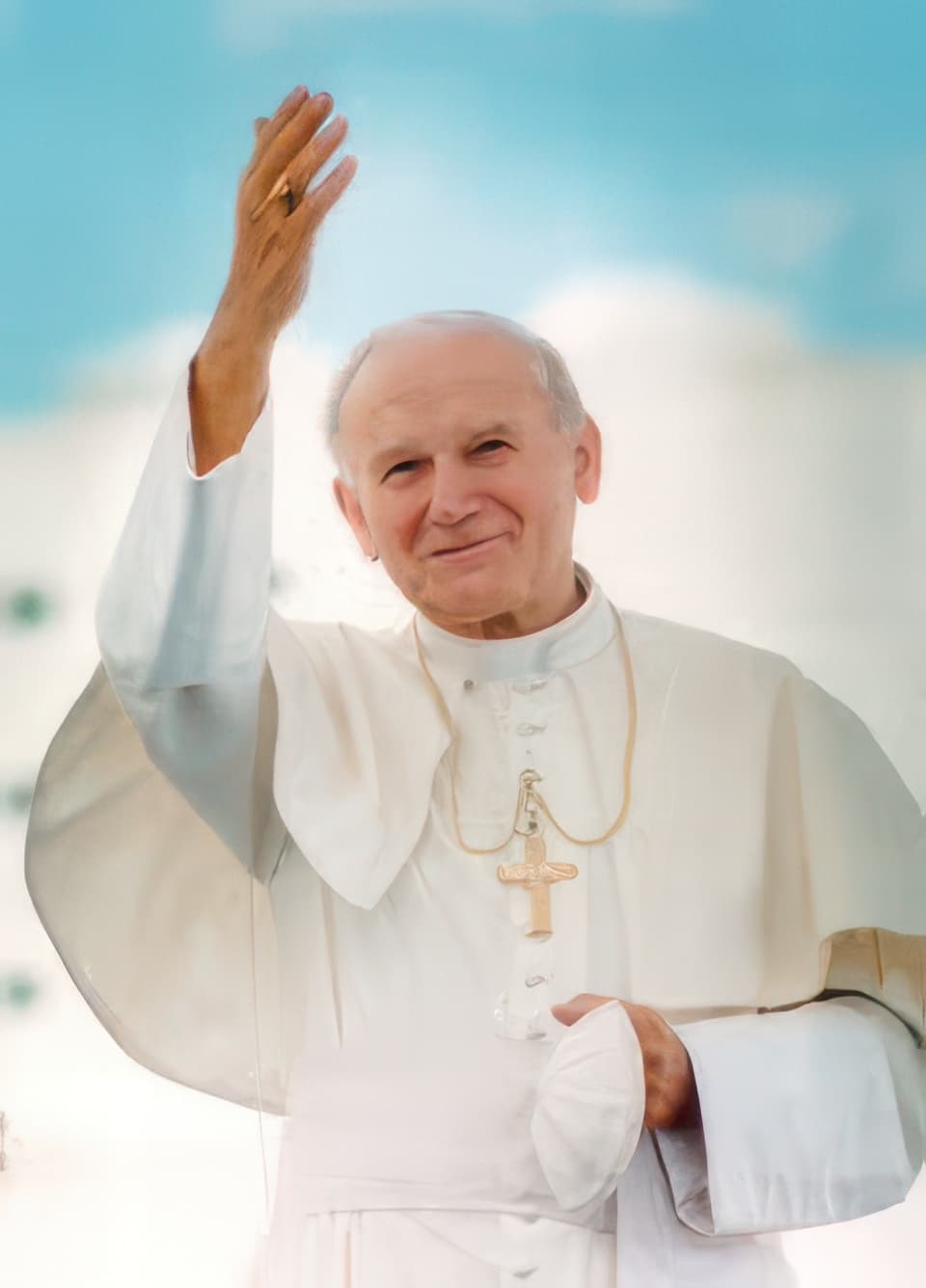
Pope John Paul II

Pope John Paul II (1920-2005)

Pope John Paul II played a crucial role in promoting the Divine Mercy devotion. Born in Poland like St. Faustina, he had a deep personal connection to the message of mercy.

As archbishop of Krakow, Karol Wojtyła initiated the informative process for St. Faustina's beatification. Later, as Pope John Paul II, he not only canonized her but also established Divine Mercy Sunday as an official feast day in the Church calendar.

In a providential sign, Pope John Paul II died on the vigil of Divine Mercy Sunday, April 2, 2005. He was canonized on Divine Mercy Sunday, April 27, 2014, by Pope Francis.

"There is nothing that man needs more than Divine Mercy—that love which is benevolent, which is compassionate, which raises man above his weakness to the infinite heights of the holiness of God."
— Pope John Paul II

Learn More

St. Faustina's Diary

The complete record of St. Faustina's revelations and spiritual experiences, published as "Divine Mercy in My Soul."

Find out more

The Divine Mercy Shrine

Visit the National Shrine of The Divine Mercy in Stockbridge, Massachusetts, or the original shrine in Krakow, Poland.

Find out more

Divine Mercy in the Second Greatest Story Ever Told

A popular video series by Fr. Michael Gaitley that explores the connections between Divine Mercy and key moments in history.

Find out more